Sola Scriptura Done Badly
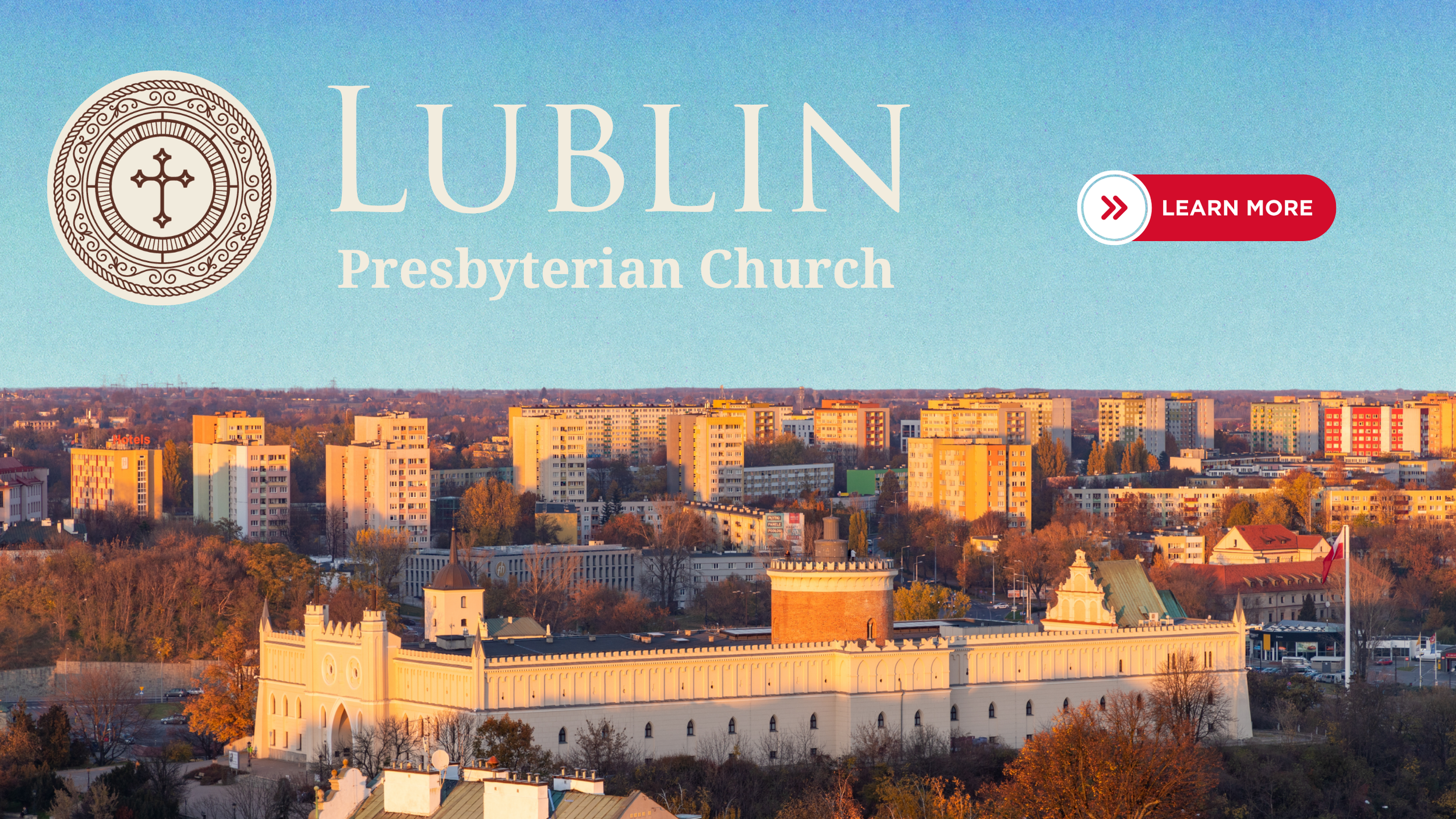
When I was asked to write about the Scriptures and Poland, my thoughts went to the question: what happens when we do Sola Scriptura badly? In post-Reformation Poland, we can find a striking example of that – Socinianism.
This movement belongs to the Radical Reformation and gained its name from the Socini family, who originated from Italy. In 1579, Faustus Socinus moved, of all places, to Poland, which at that time was relatively open to the Reformation. This openness was not accidental: the Polish–Lithuanian Commonwealth was famous in sixteenth-century Europe for its unusual degree of religious tolerance, allowing many Protestant groups to live and debate relatively freely. It was there that his thought quickly became very influential. The most distinctive mark of it was the claim that Jesus was not divine, but merely an exceptional man. This theology was codified in a catechism written in 1605 in the Polish town of Raków, hence its name – the Racovian Catechism.
Raków itself became the intellectual center of the Polish Brethren, the Unitarians who dissented from the Reformed, and it was here that they established a school and a printing press that spread Socinian writings across Europe.
To bring this closer to the English-speaking world, Socinianism and its catechism gained enough interest in Britain that no lesser figure than John Owen was asked to write against it. The reader can consult volume XII of his collected works to see how he dealt with it, but my favourite part is toward the end, where he suggested another Socinian catechism (of his own authorship) – employing considerable sarcasm to expose its folly. On the continent Socinianism was no less of a threat in the Protestant world, and theologians such as Francis Turretin also considered it worth their time to take up the pen against it.
Now, to deny the divinity of Jesus is not just an error. Anyone who claims that Jesus is not God, no matter what else that person believes or how pious a life they live, is destined for eternity in Hell.
Yet Socinianism also had a doctrine of Scripture that, on the surface, looked orthodox. So the problem was not what the Socinians thought about it or that they rejected Scripture. In fact, they appealed to it constantly. The problem was how they read it – isolated from the interpretive wisdom of the historic church. Even today, if one were to visit the Jehovah’s Witnesses website and see what they believe about the Bible, there is little that could immediately be questioned. The issue, then, is not simply a doctrine of Scripture, but the way Socinians and their anti-Trinitarian descendants read it. It is hard to fault them for emphasizing the importance of taking Scripture seriously. But in doing so, they showed a profound disregard for how Christians before them had read and wrestled with the Bible. They dismissed the church’s theological tradition as Greek philosophy and undue theological speculation. In a word, for them it was all corrupt and unbiblical – and therefore worthless.
And this is something we sometimes (perhaps too often) see among evangelicals who advocate what is called “biblicism” or “no creed but the Bible.” It looks pious, but sadly underneath it is often marked not only by ignorance but also by arrogance – and that is not a Christian virtue.
So what is the point? The Reformation was not about getting rid of tradition entirely. Historian Heiko Obermann observed that the difference between the Reformers and the papists was not that one side rejected tradition while the other embraced it, but that they differed in how the church’s tradition should be understood. To paraphrase him, the Reformers held a view he called Tradition I, which is akin to the “rule of faith” – a framework for understanding what the Bible is about and how it should be interpreted. The papist wing of the Western church held to what Obermann called Tradition II, where tradition is not subordinate to Scripture but stands alongside it, able to develop its own dogmas regarding faith and practice that are equally binding on the church.
But none of them held to a view we might call Tradition 0, where there is no place for tradition at all – where it is simply “me and the Bible.” In fact, such a view would be contrary to the Bible itself – otherwise passages such as Ephesians 4:11–14 would be of little relevance. It may sound obvious, but at the Reformation the goal was to reform the church according to the truth of Scripture, not to build something entirely new from scratch. That, however, is precisely what Socinianism – with its hermeneutic of suspicion toward the historic church – ultimately attempted to do. Sadly, even though the Socinians belong to the past, their errors are still lurking in the shadows.
The early creeds of the church illustrate this well. Statements such as the Nicene Creed or the Chalcedonian Definition were not attempts to replace Scripture, but to summarize what the church had learned from Scripture about who Christ is. They functioned as guardrails for interpretation, subservient to the Scriptures, helping the church remain faithful to the biblical witness about the Son of God.
What, then, is the reason for writing this piece? Simply this: only the Bible is infallible. But we cannot read it with disregard for the past. Rather, if we are to remain faithful to Scripture, we must read it in the context of the church universal – a community that stretches across millennia and cultures. When we do so, we become less prone to error, because our own cultural lenses are challenged and we learn to approach the sacred text with a posture of humility.
To read the Bible faithfully, then, is not to read it alone, but to read it with the church. This is a lesson that Poland from five hundred years ago can still teach us.
Reading Scripture completely on your own – nuda scriptura, or solo scriptura (as it is sometimes called) – was never the goal of the Reformation. The Reformers sought to reform the church withScripture, within the witness of the historic church – not apart from it. Holding the Bible as high as ever, the modern Reformation must not be different.